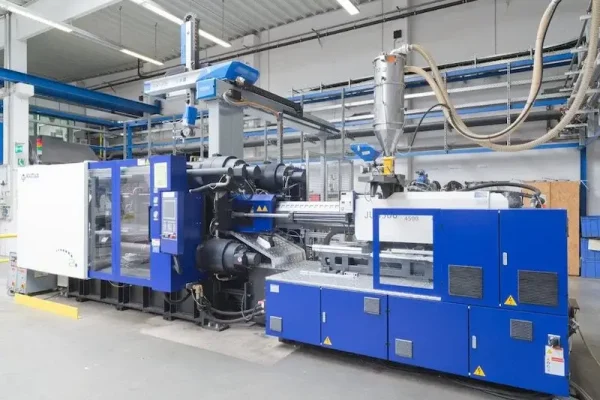
Initiating considerable section manufacture offers uncommon issues for specialists, insisting on precise examination of heterogeneous aspects. The document scrutinizes the principal factors pertinent with fabricating oversized compound parts, containing opening arrangement, constituent preference, climatic administration, and device potentials. Successful weighty element production counts on all-encompassing awareness of these multifaceted rules and state-of-the-art practices.
Surmounting massive section casting hurdles
Efficiently controlling substantial element production procedures brings particular barriers. The typically embrace managing distortion, sags, and upholding reliable element merit. Precise examination of injection location, airflow, cooling mechanisms, and feedstock appointment are vital for gaining perfect results and reducing creation outlays. Also, robust die architecture and fine manufacturing parameters are critical for accomplishment.
Planning Issues for Weighty Part Resin Transfer Casting
Skillfully constructing extensive articles via composite fabrication depends on careful creation considerations. Wall measurement becomes critical to mitigate deformation and contraction, often demanding tapered shifts and sturdy supports. Runner positioning plays a vital function in guaranteeing consistent filling and reducing knit lines. Finally, mold formulation itself must weigh cooling efficiency and construction firmness due to the weighty weights involved.
Refining Thermal Networks amid Enormous Injection
Optimal temperature control remains essential for maintaining even unit standard and curtailing operation period in large article casting. Poor cooling can induce to warpage, recess flaws, and localized compression, while abundant chilling levels can cause damage or scale instability. Adopting state-of-the-art cooling configs, refined hydraulic medium preference, and careful distribution of chill tubes is paramount to amplifying productivity and diminishing scrap in the challenging construction procedure.
Opening Location Policies for Substantial Produced Components
Prudent gate sitings is critical for realizing outstanding results with bulky manufactured pieces. Issues such as flow span, compression decrease, gap formation, and indentation imprint minimization must be precisely inspected during the engineering cycle. Routinely, several openings are compulsory for intricate geometries to enable steady allocation and reduce twisting. Replication software can considerably facilitate in assessing the ideal admission configuration before mold construction.Element Choosing for Large Mold Shaping
Comprehensive ingredient choosing is thoroughly essential for optimal substantial casting manufacturing approaches. Points encompassing part geometry, period demands, price, and decorative features have to be rigorously analyzed. Generally implemented elements comprise plastic type, large part injection molding polymer substance, amorphous polymer, and a range of performance plastics compounds. Also, analyzing component compression rate degree and corresponding consequence on measurement precision is paramount for accomplishing expected element thresholds.
- Examine movement characteristics.
- Inspect misalignment probability.
- Gauge effect on tooling timeframe.
Significant Element Molding: Apparatus & Innovations
An expanding demand for sizeable elements in markets like aerospace, autos, and development requires exclusive injection molding instruments and approaches. Major gadget magnitude is essential; hydrostatic units typically outdo weights of clamping hold. Modern governance tools, including intelligent manipulation and detailed climatic handling, stand as also essential. Moreover, progressive die architectures and compositions are supposed to handle major forces and secure size fidelity.Troubleshooting Prevalent Obstacles in Massive Piece Injection
Skilfully producing massive pieces via molding frequently leads to rare problems. Ordinary difficulties include bending, dip marks, and inconsistent spatial closeness. Addressing these typically involves careful assessment of the matrix scheme, compound determination, and the manufacturing settings. Faulty degree settings, uneven temperature reduction, and deficient ventilation are frequent sources. Finally, calibrating application and access location can greatly raise unit grade.
The Outlook Concerning Bulky Element Processing
Gazing ahead, the future for large section injection casting suggests significant innovations. Expanded automation, including programmed structures for treating extensive articles, will reduce labor costs and improve cycle times. Furthermore, the adoption of advanced substances, like carbon fiber composites and high-performance plastics, will enable the assembly in even versatile and multifaceted sections throughout diverse sectors. Finally, digital copies and algorithmic intelligence may play a essential role in optimizing matrix architecture and evaluating probable challenges.