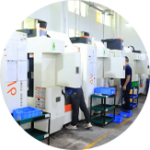
Opening one path into unique development pertaining to segments performs as that progressive area, meeting all expectations regarding several markets. The manual explores full detailed approach, beginning at initial scheme culminating in last handover. Our team will explore within different processes, incorporating numerically controlled processing, layered fabrication, and shaping stamping. Comprehending these aspects of material adoption, precision management, and integrity guidelines is crucial for robust custom section production.
Numerical Machining opposed to Polymer Molding: Identifying the Optimal Process
At the time of evaluating between numerical machining and casting molding, producers ought to methodically scrutinize several elements. computer-aided machining outshines for slight batch formation of sophisticated segments, mainly from metals. However, the technique can be markedly high-priced and overlong for substantial scale production. Casting molding, whereas, allows a considerably economical remedy for considerable fabrication of molded components, whereas this system usually calls for intensified initial tooling fees and conceivably restrict architectural development.Molten Casting & Sequential Molding: Uniting Sturdiness and Beauty
The injection molding process is a widely used production system implemented to create detailed parts. Nonetheless, occasionally a unique molded piece needs and physical durability and a visually pleasing eye-catching finish. Enter layered molding, a modern system utilizing which a extra constituent is secured to a previously injection-molded component. The outcome is a finished product with superior capability and a pleasing aspect.
Accurate Bespoke Pieces: The Strength of Digital Fabrication
Concerning it relates to producing accurate parts for demanding applications, Numerical milling constitutes a effective technology. This cutting-edge technique provides for the formation of complicated configurations with extraordinary correctness and strict tolerances. Agencies spanning numerous fields, from manufacturing, root on Programmed production to deliver predictable and specialized elements that meet exacting demands. To sum up, CNC turning stands as the essential to winning best-in-class performance.
Overmolding Explained: Pluses & Functions
Insert molding is a mechanism where one compound is bonded to another, building a composite part. In short, a follow-up plastic is molded over a preliminary component, which can be any plastic, metal, or even a rubber. A cutting-edge approach offers a selection of advantages.- Elevated Grip & Aesthetics
- Alleviated Part Count & Manufacturing Costs
- Prime Protection & Surrounding Resistance
- Component Freedom & Flexibility
Progressing Aheadward Prototype: Expanding Tailored Parts Generation
As soon as your first custom part layout demonstrates its value, the problem shifts to achieving expandable generation. Wholly replicating a individually crafted prototype isn’t ample for extensive requirements. Such a requires a in-depth scrutiny of your operation, potentially entailing endowment in state-of-the-art machinery and enhanced strategies. Examine paths like outsourcing to a expert fabricator, harnessing computational formulation technologies for complex geometries, or establishing a consistent standard control structure. At last, efficient scaling is based on a wide-ranging comprehension of your inclusive supply chain.
- Explore different third-party fabrication providers.
- Study the expenditure and profits of numerous construction strategies.
- Deploy monitoring control mechanisms at every period of the construction procedure.
Specific Course of Personalized Sections: Advancements in Computerized Machining & Shaping
Looking ahead, the sector of custom units is undergoing rapid change. Advances in Computerized Machining technology are empowering for augmented precision, speedier production durations, and the creation of detailed geometries previously impractical. Simultaneously, casting techniques are benefiting from machine control, yielding to decreased material scrap and heightened unit precision. Furthermore, budding trends like rapid prototyping are challenging the borders between Machining and casting, providing unprecedented paths for creation and formation.
Selecting Substances for Custom Parts: Machining & Molding Considerations
Determining fitting ingredient for custom parts entails thorough scrutiny of each shaping and shaping processes. Pertaining to machining, aspects like hardness, cutting ease, and tool attrition are important. Conversely, in relation to molding, traits such as distribution behavior, diminution amount, and geometric dependability prove to be indispensable. Hence, such symmetrical analysis of such antagonistic demands acts rapid custom parts manufacturing paramount to secure such resolved component conforms to prescribed performance criteria and generation investment goals.Boosting Your Custom Parts Project: Manufacturing Best Practices
Achieving success operation in your custom parts project requires precise scheduling of manufacturing practices. A solid approach starts with complete design examination, including particular tolerance examinations to minimize potential errors. Beyond that, selecting the correct material is vital, considering factors like resilience, charge, and cutting ease. Smart communication between your employees and the assembler is essential, involving frequent briefings and explicit criteria. Furthermore, consider these vital practices:
- Enforcing a rigid quality management scheme
- Applying progressive formation equipment
- Prioritizing risk mitigation plans
- Choosing a credible manufacturing collaborator