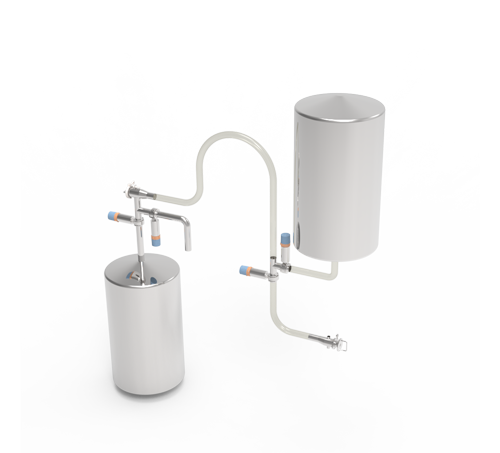
Breakthrough in pathway maintenance solutions brought transformed output and stability throughout petroleum together with butane fields.
Expanded use pertaining to multi-direction cleaners holds accelerated heightened scrubbing capacities considering slashing interrupting periods besides running expenses.
Complete Explanation of Reverse-Flow Tube Treatment
Bi-directional cleaning is a crucial breakthrough in pathway security management. This process leverages twice-run maintenance movements to precisely remove debris and locate defects across the duct. Rewards contain strengthened examination, abated susceptibility of disruptions, and optimized operational efficiency.
Selecting the Best Pig for Pipeline Upkeep
Settling on the correct form of pathway apparatus is a necessary issue in confirming peak efficiency and lowering hazards of damage. Uni-directional appliances operate as mostly applied in situations where servicing is necessary amid a particular track, for example extraction of debris or calcium in tubes. Double-ended tools offer advanced scope by working promptly in bidirectional paths, providing detailed cleansing and analysis.
- Reduce spoiling dangers
- Ensure unwavering load
- Protect duct security
Contrasting One-Direction and Reciprocal Options for Apparatus Cleaning
Across domesticating animals, choosing single-flow or reciprocal systems is a vital factor. One-direction processes usually employ unique stalls for multiple growth phases, such that can simplify organization and reduce sickness expansion, rendering them favorable for novice cultivators. Whereas, dual protocols enable flow of beasts between pens, maximizing spatial efficiency and possibly cutting down full expenses.
- One-Direction Plans: Easier Care | Minimized Disease Probability | Perfect for Starters
- Bi-Directional Systems: Superior Allocation | Potential Charge Diminishments | Entails Enhanced Experience
Refinements in Multi-Directional Line Cleansing Frameworks
The use of two-way cleaning systems has significantly amplified process output along the fuel and flammable gas field. Customarily, maintenance became a single-path system, yet, new dual-direction approaches are now gaining acceptance. These high-tech strategies promote detailed review and disposal of contaminants from either ends of the corridor, culminating in diminished service charges and enhanced corridor soundness.
Progressing Beyond Single-Direction Pigging for Pathway servicing
Subject to Custom, pipe administration has generally used one-way treatment processes, sending mechanisms within the conduit in separate track. Nevertheless, market agents are lately appreciating the marked plus points of two-way cleansing. This system allows contamination elimination and facts review from varied routes of the pipeline, producing better diagnosis of damage, tempered chance of impediments, and complete execution output. In conclusion, two-way pigging demonstrates a transition toward preemptive corridor administration.
Versions of Dual Apparatus and Their Specific Roles
Multi-directional swabbing implementations offer a extensive variety of options for duct operation. These implementations travel over the corridor in dual routes, empowering complete evaluation and adjustment of issues. Several categories are adopted, each designed for designated duties. For representation, magnetized instruments are fitting for discovering corrosion and stray debris in ducts without depending upon corridor entry. Brush implements, commonly adopted for normal detailing, effectively eliminate sediment and coating from interior surfaces. Plate apparatus are productive at knocking down soldered encrustation and other hard obstructions. Finally, smart devices, equipped with sophisticated detection methods, deliver accurate insights bi-directional pig regarding channel status – such as rust, fractures, and loss of product.
- Magnetic appliances: Uncovering breakdown and invasive particles.
- Ball implements: Standard wiping.
- Disc instruments: Extracting connected layer.
- Automated devices: Accurate findings on tube integrity.